
The first time Lily mentioned it, I laughed it off.
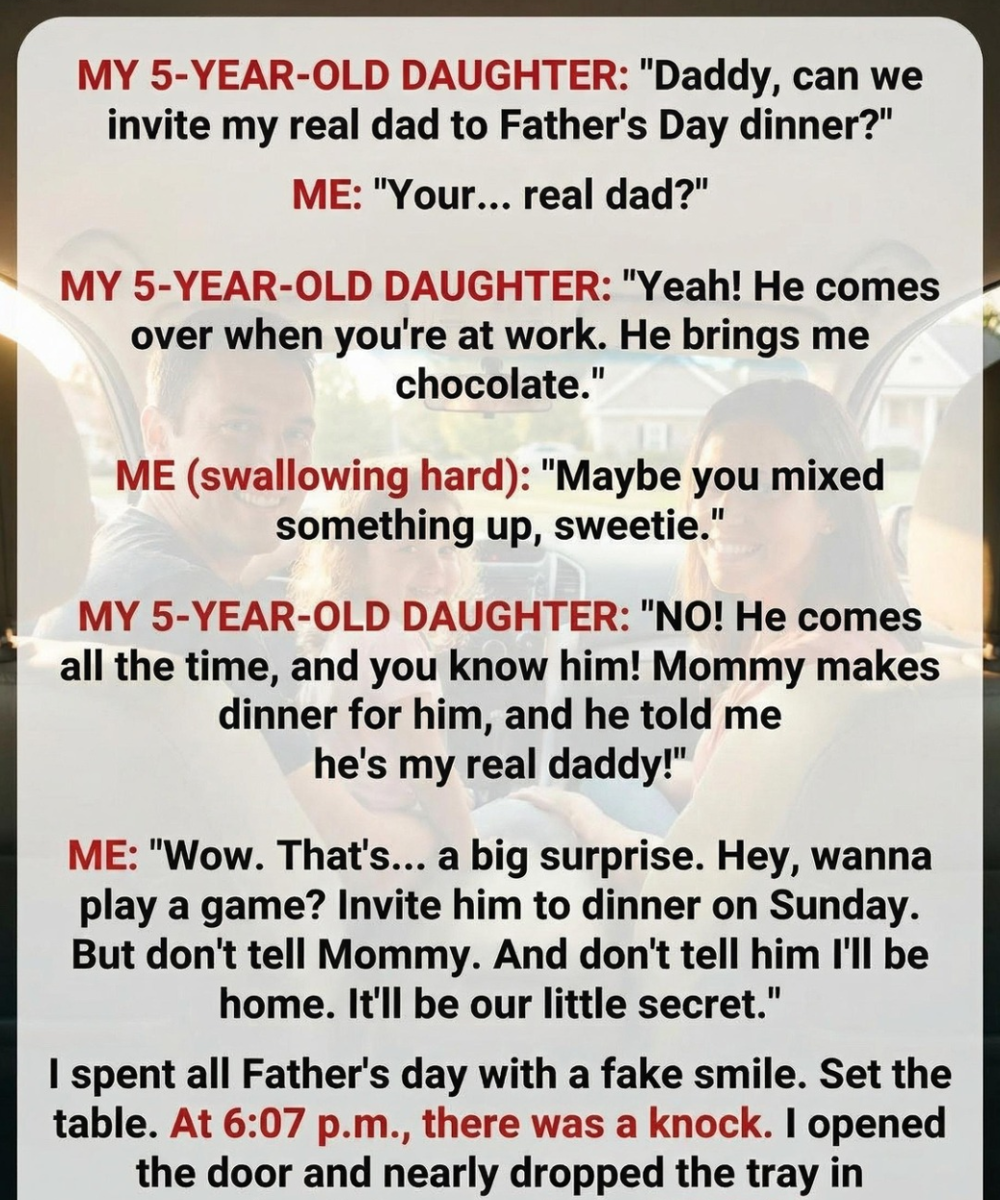
It sounded like the kind of odd, innocent thing children sometimes say without understanding the weight of their words. We were driving home from daycare when she suddenly asked, “Daddy, can we invite my real dad to dinner on Father’s Day?”
My grip tightened on the steering wheel, though I forced a light laugh and asked her what she meant. Lily, only five years old, kicked her feet happily and explained that a man came over sometimes when I was at work. He brought her chocolate. He sat with Mommy while they talked. Mommy cooked for him. And he told Lily that he was her “real daddy.”
My chest felt tight, but I kept my voice calm, suggesting she might be confused or imagining things. Lily shook her head firmly, her certainty unsettling. That night, sleep wouldn’t come. I lay awake replaying her words, caught between disbelief and a growing fear that something was terribly wrong.
By morning, I knew I needed clarity—but not chaos. I couldn’t accuse my wife without proof, and I didn’t want to frighten Lily or tear apart our home over a misunderstanding. So I turned her story into a harmless “surprise.” With a smile that felt painfully forced, I told Lily she could invite her “real dad” to our Father’s Day dinner—but that it should be a secret from Mommy. Lily clapped with excitement, thrilled by the idea.
The rest of the day passed in a haze. I cooked, set the table, and moved through the house like a shadow, counting my breaths so my daughter wouldn’t notice the storm inside me. When the clock read 6:07 p.m., a knock echoed through the house. My hands trembled as I opened the door.
CONTINUE READING IN THE NEXT PAGE