
I’m not going back home.
I never spoke to Diane again. Not because she had no right—but because I had a debt to pay. A debt to the person who loved me more than himself.
I drove to Laguna.
While traveling, I kept asking myself:
Do I still have the right to look for him?
Or am I too late for everything?
If he were still alive—I would hug him even if it hurt me.
If he were no longer alive—I hope even his ashes, I could touch them.
Around noon, I reached a small village.
There was a cottage by the lake. Quiet. Peaceful. It seemed exactly what he wanted.
I came closer.
Knock.
No one answered.
The door opened slightly because of the wind.
“Cara…” I called softly, mispronouncing the name—like I always did before.
Inside, there is a simple bed.
There is a table.
And at the table—
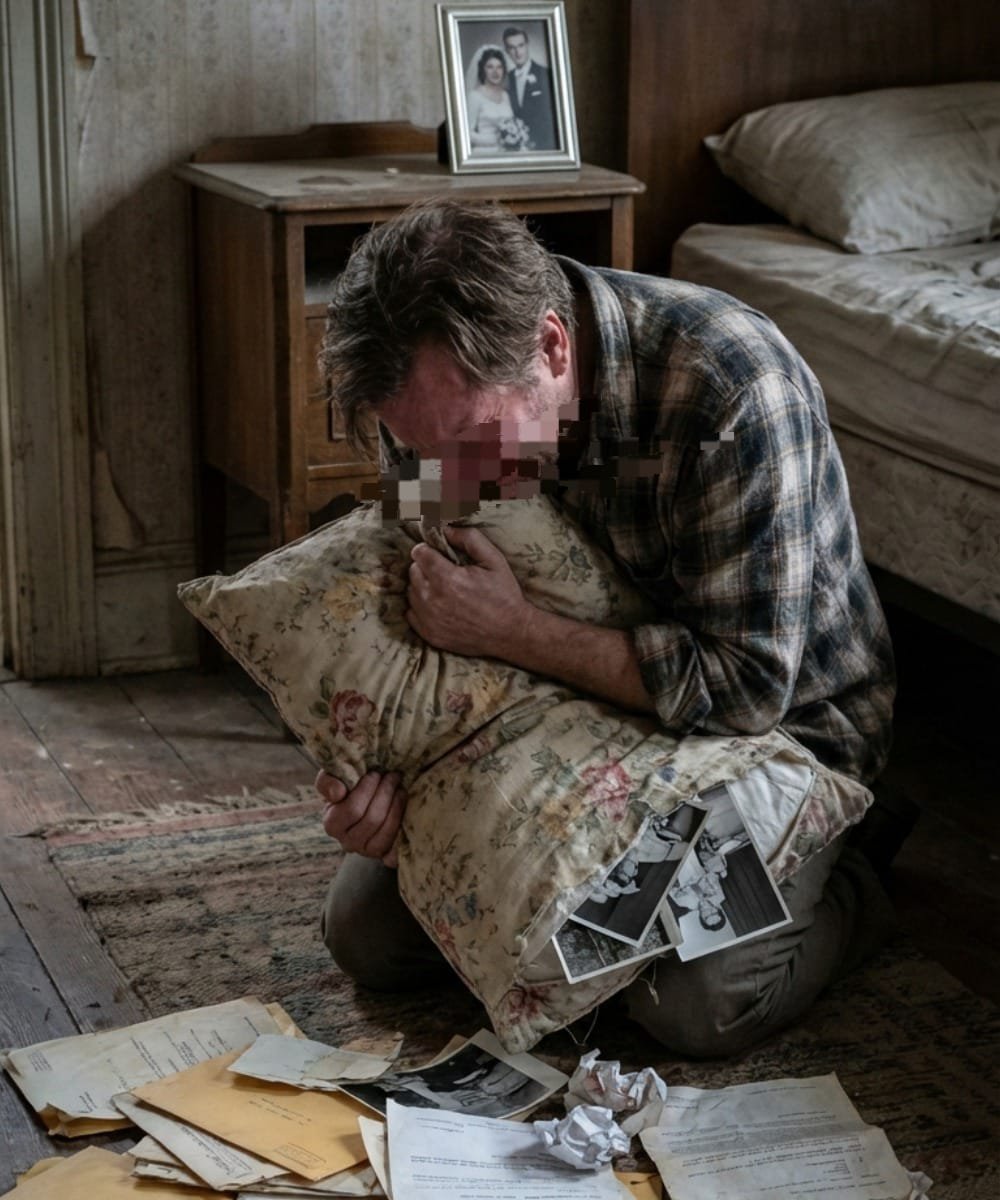
the old pillow.
His favorite pillow.
I knelt down.
“You didn’t follow me again…” I whispered.
I heard a cough.
Month.
From behind the curtain.
“Mark?” hoarse voice.
I stood up, trembling.
And that’s where I saw him.
Thin.
Weak.
But alive.
He smiled.
“At least… come before I disappear.”
My knee gave out.
I went over and hugged her—carefully, she was like glass that could break.
“I’m sorry,” I said over and over again.
“I’m sorry for everything.”
He closed his eyes.
“I don’t need an apology,” he replied weakly.
“What I need… is to know that you’re not angry anymore.”
In the afternoon, we sat side by side by the lake.
Quiet.
Peaceful.
But there’s a question in the air that we don’t utter—
Will I stay until the end?
Or will I leave him again, in the name of the freedom he bought for me?
And for the first time…
I don’t know which hurts more.
I haven’t left him since that day.
In the little hut by the lake, I learned to listen to the silence—the lapping of the water, the chirping of birds, Kara’s soft breathing as she slept. Every morning, I was awakened by the sun and the fear that it might be the last time I saw her eyes open.
“I don’t want you to feel sorry for me,” he said softly one morning as I was adjusting his blanket.
“I don’t feel sorry,” I replied. “I’m sorry.”
He smiled, tired but true. “That’s heavier.”
Every day, he gets weaker.
There are times when he can’t even walk to the window. I carry him, slowly, as if every movement is a prayer that he won’t get hurt.
“Do you remember,” he suddenly asked one afternoon, “our first fight?”
I laughed bitterly. “The one about the dish?”
“Yes,” he said. “I want sinigang. You are adobo.”
“You still won,” I said.
“No,” he laughed softly. “We’re both losers. We don’t know how to talk.”
I bowed my head. If only I had learned to listen—not just to what he said, but to what he didn’t say.
One night, while it was raining heavily, he handed me a small wooden box.
“Open it when I’m asleep,” he said. “Or when… I don’t wake up.”
I didn’t want to accept it, but he insisted. “Mark, don’t prolong the pain of not knowing.”
The next day, when he was sound asleep, I opened the box.
It contains an ultrasound photo .
My eyes widened.
There is a date—three years ago.
A letter is included.
“I’m pregnant, Mark.
But he also disappeared… with the first chemo.”
I sat down on the floor. It felt like someone had sucked the air out of my lungs.
“I didn’t tell you because it might hurt you more.”
And maybe you’ll hold on even tighter to a fight that I know will be difficult.”
I sobbed in silence.
My anger was gone.
His coldness was carrying a sadness I had never seen before.
When he woke up, I couldn’t take it anymore.
“Kara,” I said tremblingly, “let’s go back to the hospital.”
He fell silent. He looked at the lake.
“I’m tired,” he replied. “Not from the pain… but from the fighting.”
I knelt down in front of him. “I will fight for you. Even if it’s just for now.”
Long silence.
Finally, he nodded. “If we go back… not out of fear. Out of hope.”
We returned to the city. At the hospital, the doctors greeted us with surprise—and hope. The treatment began again. There were days when he couldn’t speak from the pain. There were nights when I just held his hand, praying in silence.
Diane came once.
His face wasn’t angry—it was sad.
“I know,” he said. “And… I’m not angry. I hope… you choose the right one.”
“Thank you,” I replied. “And sorry.”
He smiled and left, carrying a dignity that I could not match.
One morning, after a difficult night, Kara’s eyes opened.
“Mark,” she whispered, “the light is beautiful.”
I nodded, even though my eyes were filled with tears. “Yes. I’m just here.”
He squeezed my hand. “No matter what happens… don’t forget that I love you.”
“I love you too,” I replied, my voice finally intact.
Outside the window, the sun was rising.
And between pain and hope, I learned that there are loves that are not measured by duration—but by the courage to face the truth, even when it’s too late.
That morning arrived with a strange silence.
This is not the silence that is tense—but the silence that feels like a promise being kept. I sit by Kara’s bed, holding her hand, which is now warmer than it has been in days. Her cheeks are turning red again. Not completely, but enough to remind me that someone is coming back.
“Mark,” he called softly.
“I’m just here,” I answered immediately, as if afraid that if I didn’t answer him right away, he would disappear.
He smiled. “You’re not shaking anymore.”
I didn’t realize it. Before, every breath of his was like a clock counting down the time. Now, there’s a gap. There’s a break. There’s a tomorrow.
The doctor arrived around ten o’clock. With a resident, holding a folder. I stood up, my chest beating spontaneously.
“How are you?” I asked, trying to stay calm.
The doctor smiled. A smile I rarely saw in those hallways.
“Good news,” he said. “Kara’s body is responding positively to the new regimen. The fight is not over—but it’s clear that the treatment is working.”
I sat down.
Not because I was weak—but because the weight suddenly lightened.
I looked at Kara. There were tears in her eyes, but she was smiling.
“I told you,” he whispered, “the story isn’t over yet.”
The following weeks were not easy.
There are days when it still hurts. There are nights when he throws up from exhaustion. But there’s a big difference—he’s not alone anymore. And I’m not running away anymore.
Every morning, we had breakfast together at the small table by the hospital window. Sometimes porridge. Sometimes just bread. But there was always a story.
“When I’m okay,” he said once, “we’ll go back to the lake.”
“Yes,” I replied. “But really, not to say goodbye. To start over.”
He smiled. “And there is no secret.”
“No more,” I promised.
Three months passed before Kara was finally allowed to return home—not to the hospital, not to the hut in Laguna, but to her home.
At our house.
I didn’t change it. I didn’t erase his memory. I just cleaned up the pain that once came between us.
When he entered the room, he looked at the bed.
“It’s still here,” he said.
“Yes,” I replied. “And there’s still something missing.”
I took the old pillow out of the closet.
What used to be yellow, now has a new pillowcase—white, simple, quiet.
She was in tears.
“I thought you threw it away.”
“Absolutely not,” I said. “That’s where I learned how to listen.”
CONTINUE READING IN THE NEXT PAGE