
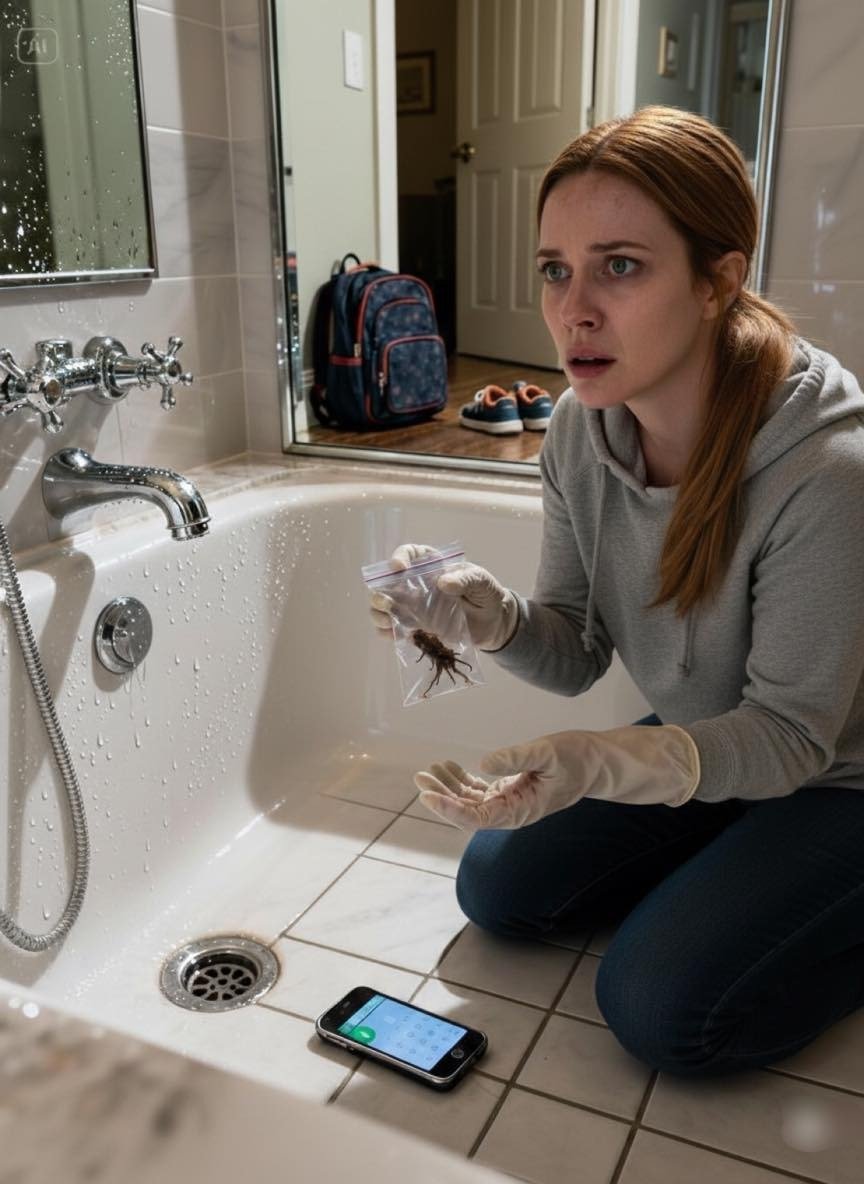
She looked up with red, tired eyes. “Will he come back?”
“No,” I said—and this time, I meant it. “He can’t.”
The case moved quickly after that. One parent came forward. Then another. The pattern became undeniable: the “cleanliness” excuse, the threats, the isolation. Mr. Keaton was arrested for inappropriate contact and coercion. The school introduced new supervision rules, bathroom escort policies, and mandatory reporting training—measures that should have existed before, but at least existed now.
Sophie began therapy. Some days were easier. Some were raw. She drew pictures of herself standing behind a locked door with a huge lock labeled “MOM.” I keep that drawing on my nightstand as a reminder of what my job truly is.
And I’ll be honest—I still think about that drain. About how close I came to ignoring a pattern because it was easier to accept “I just like to be clean.” Sometimes danger doesn’t arrive loudly. Sometimes it repeats quietly.
So if you’re reading this, I want to ask you gently: what small change in a child’s behavior would make you pause and look closer—without panic, but without brushing it off either?
Share your thoughts. Conversations like this help adults notice patterns sooner—and sometimes, noticing is what keeps a child safe.