
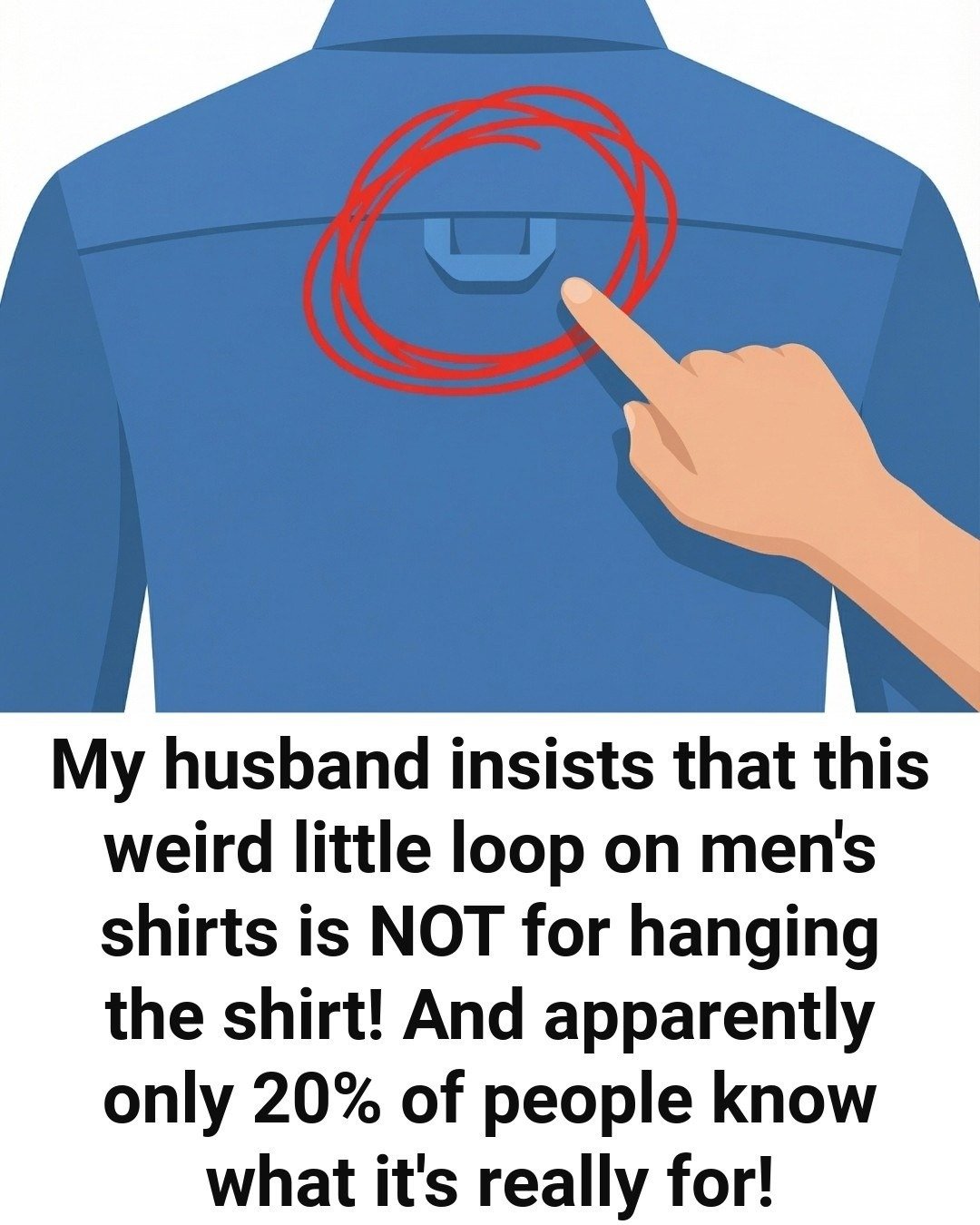
Some designers even play with it: contrasting thread, colored fabric, or embroidered initials turn the humble loop into a subtle badge of identity. For true style enthusiasts, spotting a well-placed loop is like recognizing a secret handshake.
And here’s the kicker—it’s still practical, even today.
Travelers, take note: that little loop is perfect for hanging your shirt on a hotel bathroom door, a coat rack, or even inside a garment bag. No hanger? No problem. It helps minimize wrinkles when you’re living out of a suitcase—proving that sometimes, old solutions still work beautifully in modern life.
A Quirky Side Note: The “Taken” Myth
While digging into this history, I stumbled upon a charming (if dubious) urban legend: decades ago, some college guys supposedly cut off the loop to signal they were in a relationship. No loop = taken. Their girlfriends, in turn, would wear their school pin as a matching token. Sweet? Absolutely. Slightly possessive? Perhaps. While there’s no hard evidence this was widespread, it adds a playful layer to the loop’s lore—proof that even small details can carry emotional weight.
So What Does It Mean Today?
If your shirt has a loop, it likely says more about the brand’s aesthetic than your storage needs. Some labels—like Brooks Brothers or J.Crew—consistently include it as a mark of classic tailoring. Others omit it entirely for a cleaner, minimalist look. But whether you use it or not, the loop remains a quiet heirloom of design evolution: born from naval pragmatism, adopted by campus trendsetters, and preserved by generations who appreciate the poetry of functional elegance.
Now, when you slip on a button-down and feel that soft tab against your neck, you’re not just wearing a shirt—you’re carrying a piece of history. And who knows? Next time you’re packing for a trip, you might just hang it by that loop… and give a silent thanks to the sailors who started it all.